
Knokke-Heist withdraws the award of its 25 beach bar concessions
On 29 October 2026, Knokke-Heist withdrew the 28 August award of its beach bar concessions in all four zones, after the Council of State suspended it in three of them. The law lets a municipality give up or start again; a rejected candidate keeps its remedies.
The path
- Choose the place
- Or the trade
- Read the deadline
- Open the notice
Keep in mind
Public facts
The page repeats what was published. A missing field is marked.
Read only
The page does not say who will be selected.
The document governs
The published notice and the published specification stay the source.
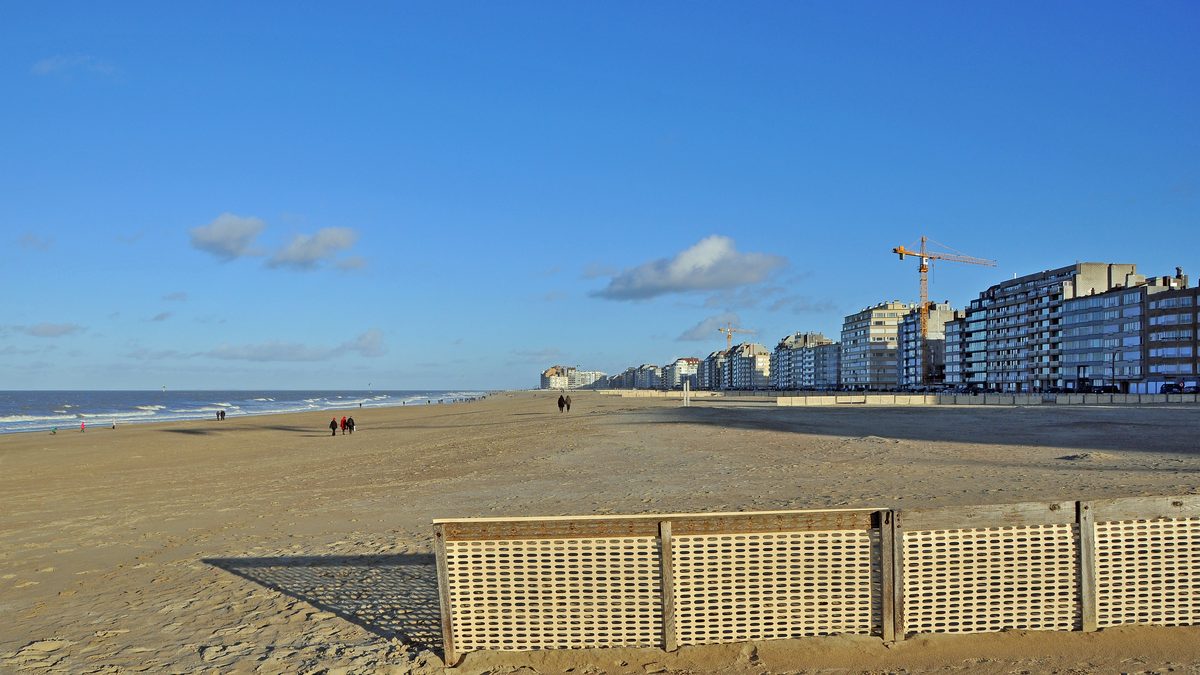
After a Council of State suspension, Knokke-Heist withdraws its beach concessions. What a small business bidding for a municipal concession should know.
What happened
On 29 October 2026, the Knokke-Heist college of mayor and aldermen withdrew the award of the beach concessions decided on 28 August 2026.
The withdrawal covers every beach bar and children’s park in the four zones: Heist, Duinbergen, Knokke and Zoute.
La Libre counts 25 concessions, 24 beach bars and one children’s park, and speaks of a renewed ‘deckchair war’: La Libre, 29 October 2026
According to the municipality, a market consultation drew 36 proposals for 26 concessions (24 beach bars and 2 children’s parks) for 2027-2035.
The college awarded them on the basis of the jury’s evaluation report.
Seven unsuccessful candidates then asked the Council of State to suspend the award as a matter of extreme urgency.
The municipality also withdraws the evaluation report of 26 August 2026 and states that no concession agreement had been signed yet: Knokke-Heist municipality, 30 October 2026
The candidates received an email from the municipality on the morning of 29 October, VRT NWS reports.
One operator complains of a lack of communication and more than a year of stress: VRT NWS, 29 October 2026
What the Council of State found
On 23 October 2026, the Council of State suspended the award in the Duinbergen, Knokke and Zoute zones.
VRT NWS quotes the Council’s statement, which raises three points: VRT NWS, 23 October 2026
A suspension, then a withdrawal
In Duinbergen, the Council also suspended the rejection of a candidate whose proposal had been declared irregular for lack of a sufficient ‘structural link’ between the company and the person who would run the bar.
According to the Council, that decision ignores several elements that could show such a link.
Only the Heist zone was outside the suspension.
A suspension is not an annulment: the law of 17 June 2013 treats them as two separate remedies (articles 14 and 15).
The municipality did not wait for a ruling on the merits.
It withdrew the whole award itself.
It says it is considering the next steps and will only communicate after a new decision.
The timetable, the criteria and the form of a new award are not known today.
A municipality may decide not to award
Article 56, second paragraph, of the law of 17 June 2016 on concession contracts is explicit: running an award procedure creates no obligation to award or conclude the concession.
The contracting entity may give up the award, or restart the procedure, in another way if needed: Law of 17 June 2016 on concession contracts (Wallex, French text)
The law of 17 June 2016 on public procurement has the same rule for contracts, in article 85.
The term ‘non-award’ is explained in the glossary: Public procurement glossary
For the candidate, the consequence is simple: as long as the concession is not concluded, the award gives no contract.
The law of 17 June 2013 also says that notifying the award decision creates no contractual commitment towards the chosen candidate (article 8, § 2).
Concession or public contract: the difference
Two laws of the same day, 17 June 2016, govern these contracts.
| Public contract | Concession | |
|---|---|---|
| Consideration | A price paid by the buyer | The right to operate, possibly with a price |
| Risk | In principle stays with the buyer | Transferred: the concessionaire is not guaranteed to recoup its investments |
| Value | Contract amount | The concessionaire’s total turnover over the contract term (article 35) |
| Term | Set by the procurement documents | Limited; above five years, no longer than the time reasonably needed to recoup investments with a return (article 37) |
| Non-award | Article 85 | Article 56 |
The public procurement law covers the contract for pecuniary interest by which a buyer obtains works, supplies or services (article 2, 17°): Law of 17 June 2016 on public procurement (Wallex, French text) The concession law covers the contract where the consideration is the right to operate the work or service, possibly with a price, and where the operating risk passes to the concessionaire (article 2, 7°).
The concession law only covers service concessions from the threshold set by the King (article 3, § 1), and it excludes some, such as the acquisition or rental of land, existing buildings or other immovable property, or rights in them (article 6).
The contracting entity organises the procedure freely, within the law and its principles (article 38).
Award criteria are objective, linked to the subject of the concession, give no unrestricted freedom of choice and come with requirements that allow the bidders’ information to be effectively checked (article 55).
The sources read do not say under which legal regime Knokke-Heist ran its market consultation.
This page therefore does not decide whether these beach concessions fell under the concession law.
The rejected candidate’s rights
The law of 17 June 2013 on reasoning, information and remedies also covers concessions within the meaning of the 2016 law, above and below the European threshold (articles 2, 3, 28 and 29/2): Law of 17 June 2013 on reasoning, information and remedies (Wallex, French text) The guide on the standstill period and remedies details these rules for contracts: Standstill period and remedies
- Reasoned decision: the contracting entity gives reasons for the award, but also for a decision to give up or restart the procedure (article 4/1). The reasons include the characteristics and advantages of the chosen tender, or the grounds for giving up (article 5/1).
- Notification: the decision is sent at once by email or electronic platform and, on the same day, by registered post, with the remedies and their time limits (articles 9 and 9/1). Without these details, the time limit for annulment only starts four months after notification.
- Standstill: above the European threshold, the concession may not be concluded before fifteen days (article 11). Below it, the standstill is mandatory for works concessions above half the threshold and optional for the others (article 30).
- Remedies: suspension on a serious ground, without having to prove urgency (article 15), within fifteen days; annulment within sixty days (article 14); damages within five years (articles 16 and 23). At the Council of State, suspension goes through the extreme urgency procedure; elsewhere, through the ordinary courts in summary proceedings (articles 15 and 24).
- Caution: a reckless or vexatious claim can cost up to 2.5% of the concession value (article 27).
What a small business bidding for a municipal concession can take away
These points follow from the reported facts and the articles cited.
They do not replace reading the concession documents or a lawyer’s advice.
- Read in the documents the announced regime, the criteria, the minimum requirements and the term: they are the basis for any challenge.
- Build a financial plan that shows the fee offered is realistic: it is the first point the Council of State raised in Knokke-Heist.
- Check that the project meets the applicable planning rules, and flag any deviation rather than let it be found.
- Document the formal conditions asked for, such as the link between the bidding company and the actual operator.
- Note the date of every notification: the fifteen- and sixty-day limits depend on it.
- Avoid heavy spending before conclusion: the municipality may give up or start again, and the award alone creates no contract.
What AOEX does and does not do
AOEX reads public notices from TED and e-Procurement, including the concession notices published there.
The 2016 laws are presented in the guide to the law of 17 June 2016: The law of 17 June 2016
AOEX does not file remedies, does not say whether a decision is lawful and knows nothing of the Knokke-Heist file beyond the sources cited.
This page is not legal advice.
Frequently asked questions
Why did Knokke-Heist withdraw its beach concessions?
On 23 October 2026, the Council of State suspended the award in the Duinbergen, Knokke and Zoute zones. After reviewing its remarks, the college decided on 29 October that the award could not be kept in its current form and withdrew it in all four zones, Heist included, together with the evaluation report of 26 August.
Can a municipality decide not to award a concession?
Yes. Article 56 of the law of 17 June 2016 on concession contracts says that running a procedure creates no obligation to award or conclude the concession. The contracting entity may give it up or restart the procedure, in another way if needed. The public procurement law has the same rule in article 85.
What is the difference between a concession and a public contract?
In a public contract, the buyer pays a price for works, supplies or services. In a concession, the consideration is the right to operate the work or service, with a transfer of the operating risk: the concessionaire is not guaranteed to recoup its investments.
What remedies does a rejected concession bidder have?
The law of 17 June 2013 also applies to concessions. It provides for a reasoned decision, suspension within fifteen days, annulment within sixty days and damages. The time limit only runs once the reasons have been communicated.
Sources
La Libre, Jacques Hermans, 29 October 2026: La Libre, 29 October 2026 Knokke-Heist municipality, press release of 30 October 2026: Knokke-Heist municipality, 30 October 2026 VRT NWS, 23 October 2026: VRT NWS, 23 October 2026 VRT NWS, 29 October 2026: VRT NWS, 29 October 2026
Law of 17 June 2016 on concession contracts, articles 2, 3, 6, 35, 37, 38, 55 and 56, read on Wallex and Justel on 1 November 2026: Law of 17 June 2016 on concession contracts (Wallex, French text) Justel: Law of 17 June 2016 on concession contracts (Justel, French text) Law of 17 June 2016 on public procurement, articles 2 and 85: Law of 17 June 2016 on public procurement (Wallex, French text) Law of 17 June 2013, articles 2, 3, 4/1, 5/1, 8, 9, 9/1, 11, 14 to 16, 23, 24, 27, 28, 29/2, 30 and 31, consolidated French text read on Wallex on 1 November 2026: Law of 17 June 2013 on reasoning, information and remedies (Wallex, French text) Justel: Law of 17 June 2013 on reasoning, information and remedies (Justel, French text)
This note describes public documents and how AOEX works. It is not legal advice.
Edited by aoex.
